

every single visit
Open 24 Hours · 7 Days a Week · Mombasa
24-Hour Care, Close to Home
Consultations, minor surgery, and on-site medication — open day and night for the Mikindani community. Walk in any time, no appointment needed.
What You Can Expect
Practical, dependable care built around our patients.

On-Site Pharmacy
Prescriptions filled the same visit, no need to travel elsewhere.
Our pharmacy is in the same building as our consultation rooms, so the medication your clinician prescribes is dispensed before you go home.
- No second trip and no queue at another chemist — treatment starts the same day.
- Our pharmacist explains what each medicine is for, how to take it, and for how long.
- Ask us about anything you are unsure of, including side effects and how a new medicine fits with what you already take.
- Refilling for an ongoing condition? Bring your previous prescription or the medicine packet with you.
On-Site Laboratory
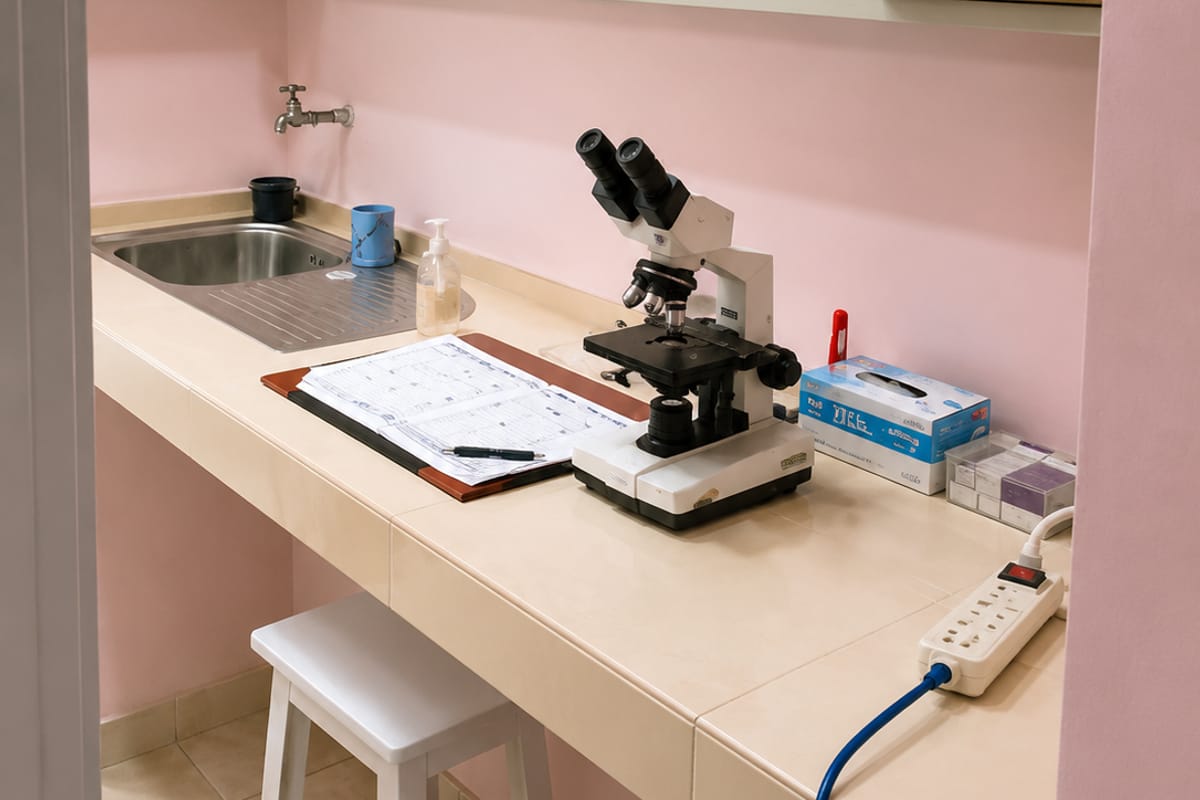
Common diagnostic tests processed on-site to support same-visit treatment.
Many everyday tests are run here in our own laboratory rather than being sent away, which means your clinician can often act on the result during the same visit.
- Samples are collected and processed on the premises by our laboratory technician.
- Results go straight back to the clinician who saw you, so your treatment plan can start without a return trip.
- Tests that need specialised equipment are referred, and we will explain where to go and what to expect.
- Your results are filed against your Patient ID so they can be compared over time.
Unique Patient ID
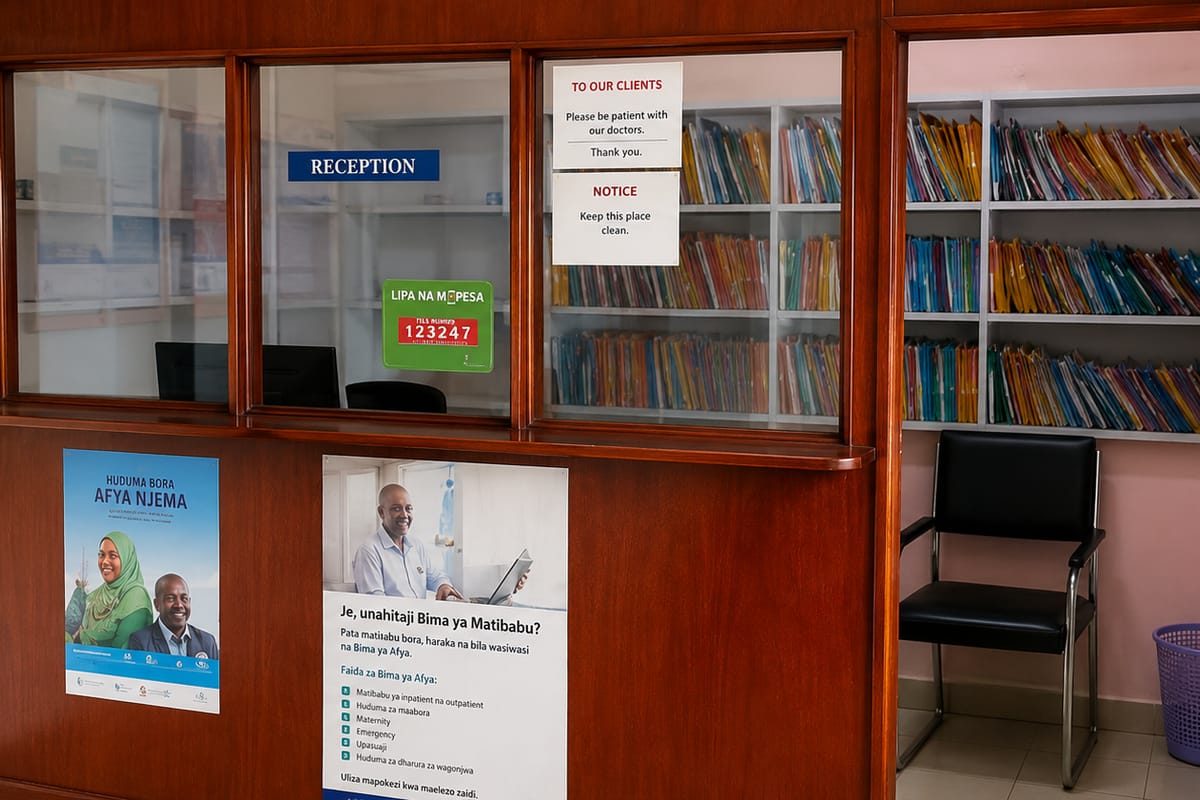
Every patient is registered with a unique Patient ID for secure, organised records.
On your first visit we register you and issue a Patient ID that stays with you for every visit afterwards.
- Your history, prescriptions, and lab results are kept together under one number.
- Returning patients are found quickly at reception, which shortens the wait before you are seen.
- Your clinician can see what was prescribed or tested before, instead of starting from scratch.
- Records are handled confidentially and shared only with the team caring for you.

WhatsApp Booking
Book an appointment without waiting in a phone queue.
Use the booking form on this page and it will open WhatsApp with your details already written out — you just press send, and we reply to confirm.
- Message us at any hour; there is no phone queue to sit through.
- Tell us your name, phone number, the service you need, and your preferred date.
- We reply on WhatsApp to confirm the appointment or suggest the nearest available time.
- Prefer to talk? Call 0722 872147 or 0105 361277. Walk-ins are always welcome.
Our Services
Comprehensive Outpatient Care
Excellence. Integrity. Compassion.

Outpatient Consultation
Walk-in and scheduled consultations for everyday illness.
This is our general clinic: you are seen by a clinician, examined, and given a treatment plan the same visit. No admission is required.
- Common reasons to come in: fever, cough and chest complaints, malaria symptoms, stomach upsets, headaches, aches and pains, skin problems, and minor injuries.
- If a test would help, our on-site laboratory can often run it while you wait.
- Any medication prescribed is dispensed at our pharmacy before you leave.
- If your condition needs a hospital or a specialist, we stabilise you and refer you with clear notes.
- Please bring your Patient ID if you have visited us before, plus any medicine you are currently taking.

Minor Surgery
Suturing, wound care, and other minor procedures.
Small procedures done here in our treatment room, under local anaesthetic where needed, so you can go home the same day.
- Stitching of cuts and lacerations, and removal of stitches afterwards.
- Cleaning and dressing of wounds, burns, and abscesses, with follow-up dressing changes.
- Removal of small skin lumps and foreign bodies.
- We explain the procedure and aftercare before we begin, and advise on when to return.
- Larger operations are referred to a hospital theatre — we will tell you honestly if that is the safer option.

Pharmacy & Medication
On-site pharmacy dispensing after every consultation.
Our pharmacy dispenses what your clinician prescribes, right after your consultation, and takes the time to make sure you know how to use it.
- Your prescription is filled before you leave the building.
- The pharmacist goes through the dose, the timing, and how many days to continue.
- Finish the full course of any antibiotic, even once you feel better.
- Tell us about every medicine you already take, including herbal remedies, so we can check for interactions.
- Bring your old packet or prescription when collecting medication for an ongoing condition.

Maternal & Child Health
Antenatal, postnatal, and child growth monitoring.
Care for mothers and young children, led by our registered nurses, from pregnancy through your child’s early years.
- Antenatal care: regular check-ups through pregnancy, with blood pressure and routine screening.
- Postnatal care: follow-up for mother and baby after delivery.
- Child health: growth monitoring, weight and development checks, and immunisation.
- Advice on feeding, nutrition, and the warning signs that mean you should come back sooner.
- Please bring your antenatal card or your child’s clinic booklet to every visit.

Chronic Disease Care
Ongoing management for hypertension, diabetes, and more.
Long-term conditions need steady, regular follow-up rather than one-off visits. We keep track of your numbers over time under your Patient ID so changes are easy to spot.
- Regular review for high blood pressure, diabetes, asthma, and similar ongoing conditions.
- Blood pressure and blood sugar checks, with on-site lab tests when they are needed.
- Repeat medication dispensed at our pharmacy, with adjustments as your clinician advises.
- Practical guidance on diet, salt, exercise, and weight that fits everyday life.
- Keep your review appointments even when you feel well — that is exactly when these conditions are best controlled.
Laboratory Services
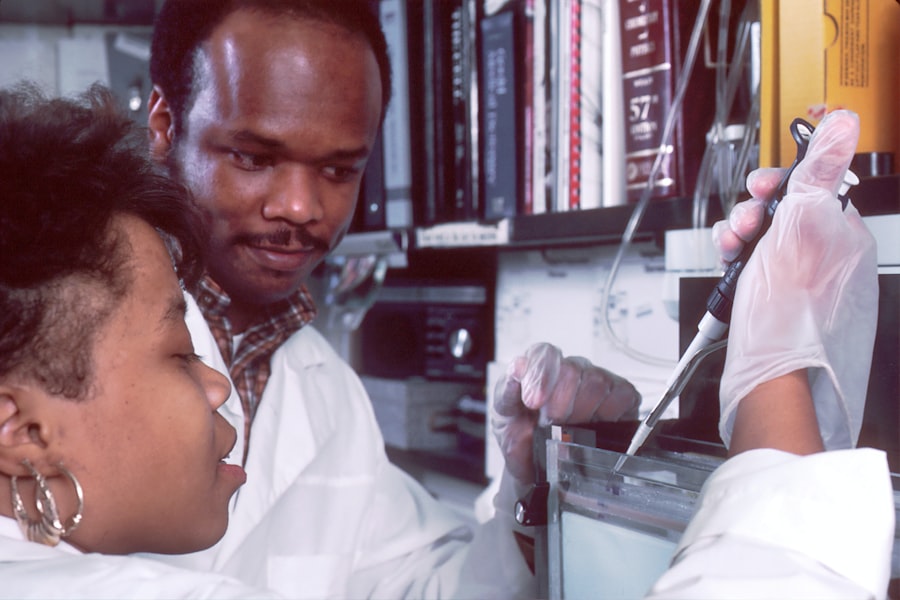
On-site diagnostic testing for fast, accurate treatment.
Our laboratory technician runs common diagnostic tests here on the premises, so your clinician can usually act on the result during the same visit.
- Routine tests that support everyday diagnosis, ordered by the clinician who examined you.
- Samples are collected on site — ask whether your test needs you to fast beforehand.
- Results return directly to your clinician and are filed under your Patient ID.
- Tests requiring specialised equipment are referred, with clear directions on where to go.
- Keeping past results on file means trends can be compared visit to visit.

HIV Testing & Counselling
Confidential voluntary counselling and testing (VCT), delivered with dignity and complete privacy by a trained member of our care team.
Voluntary counselling and testing, offered without judgement by a trained member of our care team. You do not need a referral and you do not need to explain yourself to anyone.
- Private: counselling and testing happen in a closed room, one to one.
- Confidential: your result is yours. It is not discussed with family, employers, or anyone else without your consent.
- Voluntary: you decide to test, and you may stop at any point.
- We talk through what the result means either way, and answer whatever you want to ask.
- If your result is positive, we link you to ongoing treatment and support — you will not be left to work it out alone.
- Testing is worth doing even when you feel completely well, and knowing early keeps you healthier.
Inside La-tullah
A Look Inside Our Facility
Clean, modern spaces built for calm, efficient care.
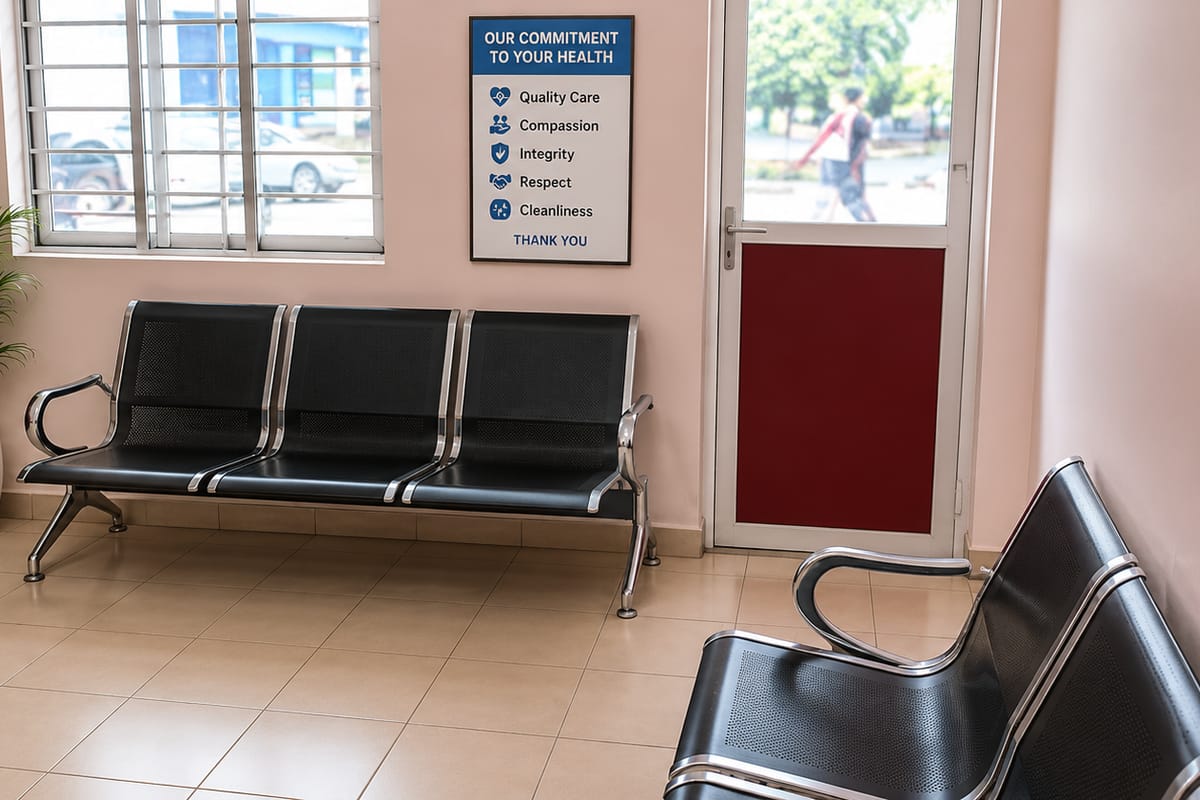
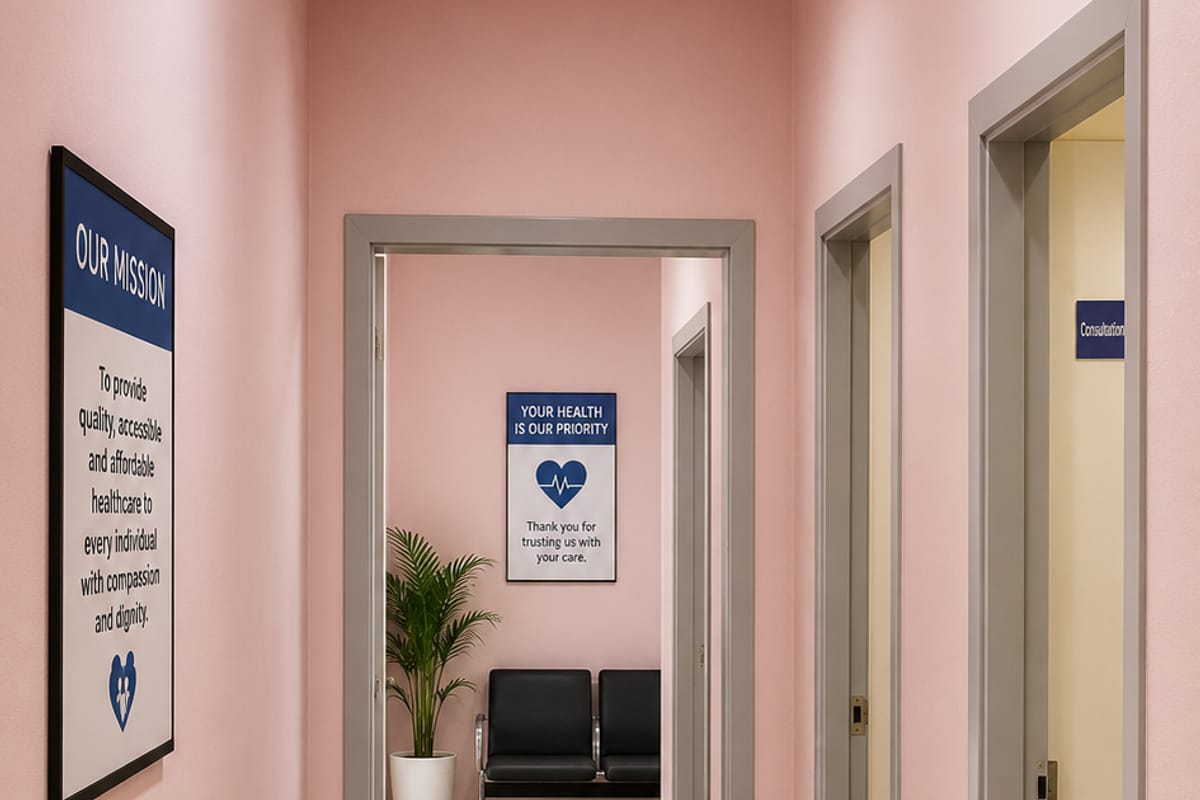
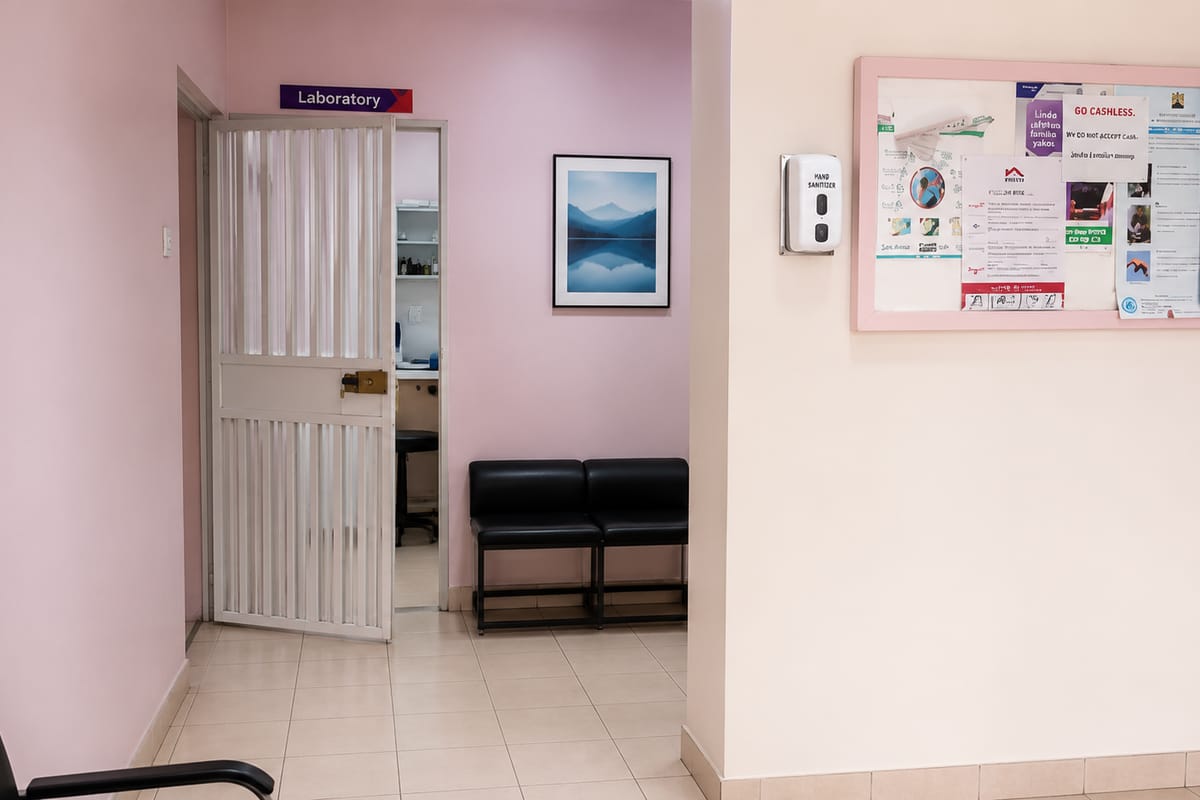
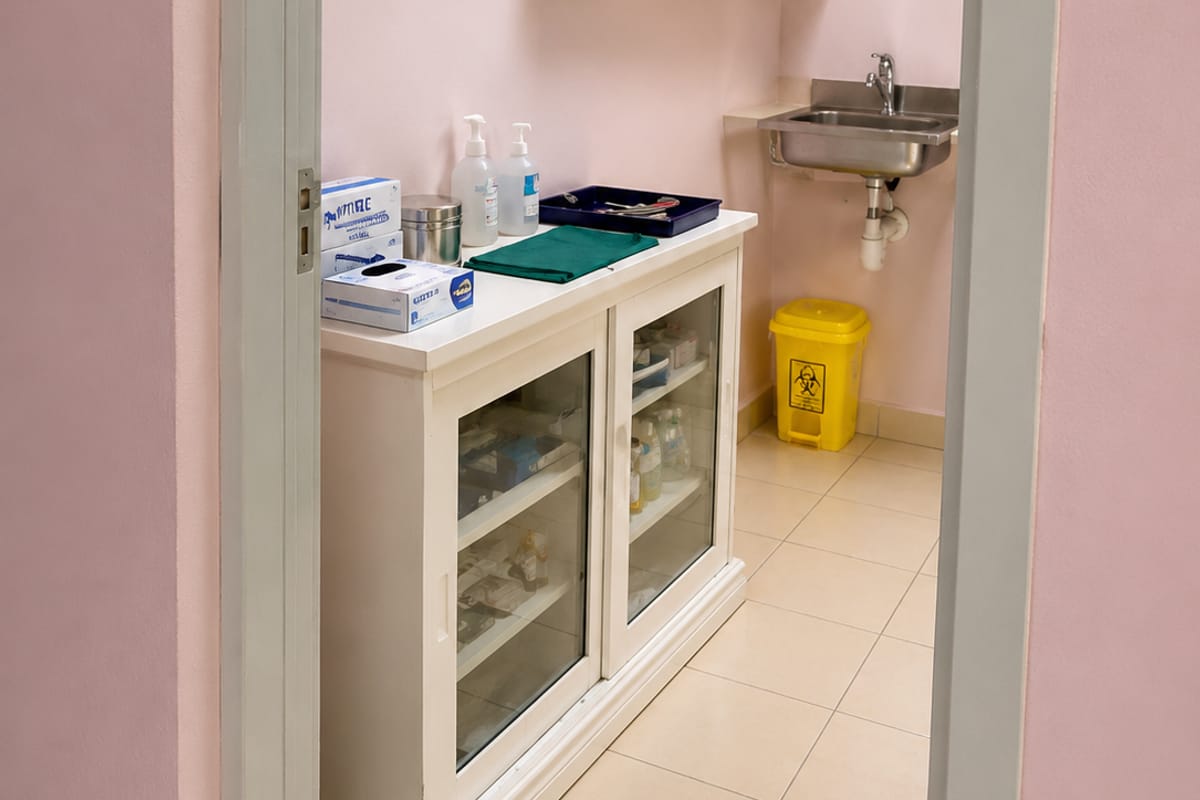
Our Care Team
Doctors & Staff You Can Trust
Registered medical professionals giving you attentive, respectful care at every visit.

Medical Officer In-Charge
Oversees general consultations, diagnosis, and treatment plans, and coordinates referrals when needed.
The Medical Officer In-Charge carries clinical responsibility for the centre and for the standard of care every patient receives here.
- Sees patients for general consultations, diagnosis, and treatment planning.
- Reviews the more complex or unclear cases that the team brings forward.
- Decides when a hospital or specialist referral is the right step, and coordinates it.
- Supervises clinical standards across consultations, the pharmacy, and the laboratory.

Clinical Officers
Provide day-to-day outpatient consultations, minor procedures, and chronic disease follow-up.
Our clinical officers are who most patients see on a normal day. They examine you, reach a diagnosis, and start your treatment.
- Everyday outpatient consultations for both walk-in and booked patients.
- Minor procedures such as suturing and wound care.
- Follow-up reviews for hypertension, diabetes, and other ongoing conditions.
- Order laboratory tests and interpret the results with you.
- Escalate to the Medical Officer In-Charge whenever a case needs another opinion.

Registered Nurses
Lead maternal and child health services, immunization clinics, and patient care throughout every visit.
Our nurses are usually the first and the last person you see, and they lead our maternal and child health services.
- Antenatal and postnatal check-ups for mothers.
- Child growth monitoring and immunisation clinics.
- Initial checks — temperature, blood pressure, weight — before you see the clinician.
- Injections, dressings, and treatment-room care.
- Explaining aftercare at the end of a visit so you leave knowing exactly what to do at home.

Pharmacist
Dispenses and explains prescribed medication on-site immediately after your consultation.
Our pharmacist dispenses your medication on site and makes sure you leave knowing how to take it properly.
- Fills your prescription straight after the consultation.
- Explains the dose, the timing, and how long to continue.
- Checks new medication against what you already take, including herbal remedies.
- Answers questions about side effects and what to do if you miss a dose.
- Advises on storing medicine safely, especially with children in the house.

Laboratory Technician
Runs on-site diagnostic tests so your treatment plan can start the same day, wherever possible.
Our laboratory technician collects and processes samples here on the premises, which is what makes same-visit treatment possible.
- Collects samples carefully and with as little discomfort as possible.
- Runs the routine diagnostic tests your clinician has ordered.
- Returns results directly to your clinician and files them under your Patient ID.
- Will tell you if a test needs preparation, such as fasting beforehand.
- Maintains quality and handling standards so results can be trusted.

Physiotherapist
Guides rehabilitation and mobility recovery for patients managing injury or chronic conditions.
Our physiotherapist helps you recover movement and manage pain after an injury, an operation, or through a long-term condition.
- Rehabilitation after injuries, sprains, and fractures.
- Treatment for back, neck, shoulder, and joint pain.
- Mobility work for patients living with stroke, arthritis, or other chronic conditions.
- Exercises you can keep doing at home, explained so they are easy to follow.
- Advice on posture and safe movement for work and daily life.
Patient Resources
Health Tips & FAQs
Simple guidance to help you and your family stay well.

Managing Hypertension
Take medication as prescribed, reduce salt intake, and keep regular check-up appointments.
High blood pressure usually causes no symptoms at all, which is exactly why it is dangerous. Left uncontrolled over years it damages the heart, kidneys, eyes, and brain. The good news is that it responds very well to steady, consistent management.
- Take your medication every day, at the same time, even when you feel perfectly fine. Feeling well means the treatment is working — not that you can stop it.
- Never stop or change a dose on your own. Talk to your clinician first if cost or side effects are a problem, because there are usually options.
- Cut down on salt. Go easy on the salt shaker and on stock cubes, crisps, and processed or tinned foods.
- Keep moving. Around 30 minutes of walking on most days genuinely helps.
- Limit alcohol and stop smoking — both push blood pressure up.
- Come for your reviews so we can track your numbers over time and adjust treatment early.
Seek care urgently if you have chest pain, difficulty breathing, a severe headache with blurred vision, weakness or numbness on one side of the body, or difficulty speaking.

A Child’s Fever
Seek care promptly for a fever lasting more than two days, or with difficulty breathing.
Fever is the body fighting an infection, and many childhood fevers settle on their own. What matters most is not the number on the thermometer but how your child looks and behaves — and here on the coast, any fever can be malaria until proven otherwise.
- Keep fluids going. Offer water, breastmilk, or oral rehydration solution often, in small amounts.
- Keep your child cool and comfortable in light clothing. Do not wrap a feverish child in blankets.
- Give paracetamol at the dose for your child’s weight, not an adult dose split in half. Ask us if you are unsure.
- Never give aspirin to a child.
- Do not use leftover antibiotics from a previous illness or from someone else.
Bring your child in the same day if the fever lasts more than two days, or at any point if your child is under three months old, is breathing fast or with difficulty, is drowsy or hard to wake, is having fits, is refusing all feeds, has a stiff neck, has a rash that does not fade when pressed, is not passing urine, or simply seems to be getting worse. Trust your instinct — if you are worried, come.

Antenatal Visits
Bring your antenatal card and attend all scheduled check-ups for you and your baby.
Antenatal care exists to catch problems early, while they are still easy to manage. Most of what threatens a pregnancy gives warning signs long before it becomes an emergency — but only if someone is checking.
- Start early. Book your first visit as soon as you know you are pregnant, rather than waiting until later months.
- Attend every scheduled visit, even when you feel completely well.
- Bring your antenatal card every time. It is your record and the next clinician needs it.
- Take your supplements — iron and folate — as prescribed.
- Sleep under a treated mosquito net. Malaria in pregnancy is serious for both you and your baby.
- Avoid alcohol and smoking, and check with us before taking any medicine, including herbal ones.
- Plan your delivery with us in advance rather than deciding on the day.
Come immediately, at any hour, if you have vaginal bleeding, severe or persistent headache, blurred vision, severe abdominal pain, fever, swelling of the face and hands, fluid leaking, or if your baby’s movements slow down or stop.

Staying Hydrated
Drink water throughout the day and watch for signs of dehydration in hot weather.
Mombasa’s heat and humidity mean you lose fluid steadily through the day without really noticing. Dehydration creeps up quietly, and by the time you feel thirsty you are already behind.
- Sip through the day rather than drinking a lot at once. Do not wait until you feel thirsty.
- Drink more when you are working outdoors or in the sun, exercising, or unwell with fever, vomiting, or diarrhoea.
- Watch your urine. Pale is good; dark yellow with a strong smell means drink more.
- Use safe water — boiled, treated, or bottled.
- Go easy on sugary sodas and alcohol, which work against you.
- Keep an eye on children and older relatives, who dehydrate faster and complain less.
Use oral rehydration solution and come and see us if there is diarrhoea or vomiting that will not settle, dizziness or fainting, a dry mouth with very little urine, a fast heartbeat, or confusion. In a young child, sunken eyes, no tears when crying, a sunken soft spot, or unusual drowsiness need care the same day.
Before You Visit
Frequently Asked Questions
Quick answers about our location, hours, SHA cover and services.
Where is La-tullah Medical Centre located?
We are along Mikindani Main Road, next to Kwa Shee Junction, in Mikindani, Mombasa. We serve Mikindani, Jomvu, Changamwe and the wider Mombasa County. Open in Google Maps.
What are your opening hours?
We are open 24 hours a day, 7 days a week, including weekends and public holidays. Walk-ins are welcome at any time, day or night — or call 0722 872147 / 0105 361277.
Do you accept SHA (Social Health Authority)?
Yes, SHA is accepted at La-tullah Medical Centre. Please carry your SHA details and a national ID when you visit so we can register your cover.
Do I need an appointment, or can I walk in?
Walk-ins are always welcome. You can also book ahead using the WhatsApp booking form on this page, or by calling 0722 872147 or 0105 361277, and we’ll confirm your appointment.
What services does La-tullah Medical Centre offer?
We provide outpatient consultations, minor surgery, maternal and child health (antenatal, postnatal and immunisation), chronic disease care, an on-site laboratory, an on-site pharmacy, HIV testing and counselling (VCT), and physiotherapy. See our full list of services.
Do you have a pharmacy and laboratory on site?
Yes. Prescriptions are dispensed at our on-site pharmacy right after your consultation, and common diagnostic tests are processed in our on-site laboratory, so treatment can often start during the same visit.
Visit or Reach Us
We’re here for the Mikindani community, every day.
Next to Kwa Shee Junction, Mikindani, Mombasa
Email us anytime
Day and night, weekends and public holidays · Walk-ins welcome
Wherever the art of medicine is loved, there is also a love of humanity.
— Hippocrates
Book an Appointment
Fill in your details and we’ll confirm your appointment over WhatsApp.